ARCOMATIC INDUSTRIAL RESTORATION CONTROL
Water Damage Restoration South Florida
Homes and businesses all over South Florida can experience water damage without warning and become a major problem. Water intrusion can happen from a variety of reasons such as hurricanes, heavy rain, burst pipes, roof leaks, appliance leaks, or plumbing problems and can cause structural damage, mold, ruined property and costly repairs if left unresolved.
The tropical climate, regular storms and humidity in South Florida make the task of restoration quite a challenge. Flooding, storm surges and moisture damage continue to pose a threat to properties in counties such as Miami-Dade, Broward, Palm Beach County, Fort Lauderdale, Boca Raton, Hollywood, and West Palm Beach. Climate factors in the region greatly contribute to secondary damage once water has entered the property.
Whether it’s a roof leak, a pipe burst, or any other type of water damage, this guide outlines all the information property owners need to know, such as the causes of water damage, how to handle it, its timeframe, what types of insurance will cover it, and how to prevent it.
ENVIRONMENTAL ANALYSIS
Water damage poses a significant problem in South Florida.
It is a serious issue in South Florida that needs professional attention. South Florida’s environment gives rise to more and more water damage incidents.
The following are considered to be common regional factors:
Tropical storms or hurricanes
Heavy seasonal rainfall
Storm surge flooding
High humidity levels
Aging plumbing systems
Roof leaks
Failure of drainage systems to maintain the air conditioning.Failure of AC drainage.
Sewer backups
Appliance malfunctions
REAL-TIME HAZARD ALERT
Recent flooding in South Florida highlighted both how quickly heavy rain can overwhelm a drainage system and how it can affect homes and businesses.
South Florida has a high humidity level, which hinders evaporation, and can provide the perfect environment for microbes to thrive, unlike the dry climates. Mold growth can start in 24-48 hours after exposure to water.
While some problems are more prevalent than others, these are the most common causes of water damage in South Florida homes.
85%
RH Threshold
Average High Humidity
24-48
Hours
Microbe Growth Start
ROOT CAUSE DIAGNOSTICS
Common Sources & Mitigation Vectors
Detailed technical teardown of key triggers that drive structural moisture failures.
Hurricane and Storm Damage
Hurricanes and tropical storms happen in South Florida on a regular basis and can cause:
- Roof failures
- Broken windows
- Storm surge flooding
- Wind-driven rain intrusion
- Foundation seepage
Water can enter the weakened areas of a building even with moderate storm events.
Plumbing Failures
One of the biggest causes of indoor water damage continues to be plumbing issues.
Examples include:
- Burst supply lines
- Slab leaks
- Pipe corrosion
- Drain line failures
- Broken fittings
- Water heater leaks
- Older homes throughout South Florida may still have old pipes that can break unexpectedly.
Pipe structural stability declines heavily in coastal saltwater environments.
Air Conditioner Leaks
In South Florida, there is a constant need for air conditioning throughout the year.
You may experience some of the following water problems related to your HVAC system:
- Clogged condensate drains
- Frozen evaporator coils
- Cracked drain pans
- Improper installation
One of the most common hidden sources of water damage are air conditioning systems.
Appliance Malfunctions
The source of water damage is frequently:
- Hose failure in washing machines
- Dishwasher leaks
- Water line problems with refrigerator.
- Water heater ruptures
- Ice maker leaks
Leaks can go undetected for weeks and lead to a big problem.
CONTAMINATION CLASSIFICATION
Categories of Water Damage
Water damage comes in various categories.Water damage has various categories. Water is categorized by water restoration professionals based on how contaminated it is.
CAT 01
Category 1: Clean Water
Originates from sanitary sources such as:
- Leaky pipes and faucets
- Sink overflows
- Rainwater intrusion
- Appliance supply lines
Clean water is safe at first, but can rapidly become hazardous when not properly treated. It the least dangerous one on the list though.
CAT 02
Category 2: Gray Water
May contain ingredients that can make a person sick.
Sources include:
- Washing machines
- Dishwashers
- Sump pump failures
- Overflows from toilets without sewage.
During restoration, gray water needs sanitation procedures.
CAT 03
Category 3: Black Water
Water that is highly contaminated and might contain:
- Sewage
- Floodwater
- Storm surge water
- Ocean intrusion
- Bacterial contaminants
Professional cleanup is essential due to serious health hazards.
DIAGNOSTIC SCANNING
You can identify hidden water damage by looking for any of the following:
Not all water damage will be obvious. Watch for:
- Musty odors
- Peeling paint
- Bubbling drywall
- Soft flooring
- Ceiling stains
- Warped wood
- Increased humidity
- Visible mold growth
- Higher utility bills
It may be behind the walls and damage continues after the event.
STRUCTURAL RESTORATION PROTOCOL
The Water Damage Restoration Process
The water damage restoration process is a well-defined procedure that is designed to restore the property to a safe state and reduce damage to the property as much as possible.
1. Emergency Response
Rapid response minimises damage progression.
Professionals often provide:
- 24/7 emergency service
- Water source identification
- Initial safety assessment
- Immediate mitigation planning
Time is of the essence as delays make restoration more complicated.
2. Water Extraction
Standing water can be pumped out of the ground with industrial extraction equipment by doing so:
- Truck-mounted extraction systems
- Pumps
- Vacuums
- Specialized extraction tools
The removal of bulk water removes bulk water quickly which reduces structural absorption.
3. Moisture Inspection and Mapping
To help them run advanced tools, such as:
- Moisture meters
- Thermal imaging cameras
- Hygrometers
- Infrared technology
Usually, there are concealed water pockets behind walls or beneath the floor.
4. Mold Inspection and Mold Remediation
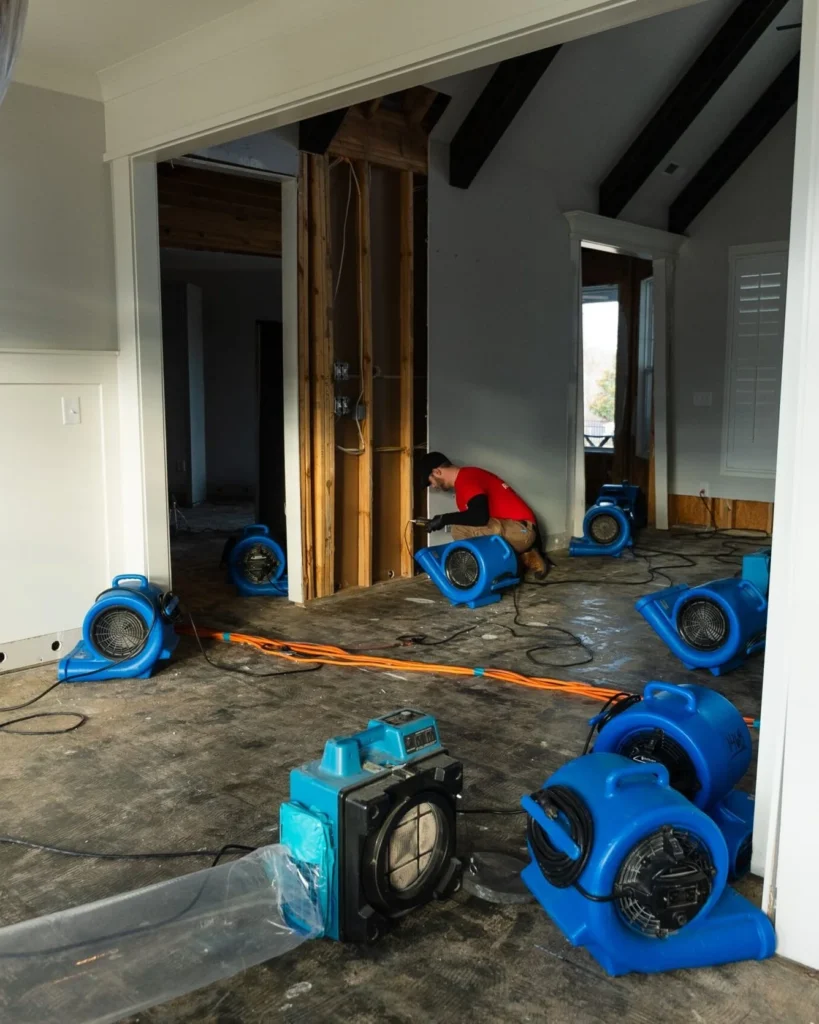
Various industrial equipment could involve:
- Air movers
- Commercial dehumidifiers
- Desiccant systems
- HEPA filtration systems
In humid climates such as South Florida, tough drying methods may be needed.
5. Cleaning and Sanitization
There may be a need to treat affected materials with:
- Antimicrobial treatment
- Surface disinfection
- Odor removal
- Contamination control
Microbial growth risks can be reduced by sanitization.
6. Restoration and Repairs
Final restoration may include the following:
- Drywall replacement
- Flooring installation
- Painting
- Structural repairs
- Cabinet restoration
The aim is to restore the asset to its “before-the-loss” state.
FINANCIAL NAVIGATOR
Will Insurance Pay for Water Damage?
Coverage is dependent upon the source of damage.
Often Covered
Restoration and cleanup costs typically approved:
- Sudden plumbing failures
- Appliance leaks
- Burst pipes
- Accidental water discharge
Often Excluded
Standard parameters that may result in claim denial:
- Long-term neglect
- Maintenance issues
- The cost for damage due to flooding that is not covered by a separate flood insurance policy.
In Florida, often times flooding and water damage follow separate insurance pathways.
Thoroughly document the damage to the documents with:
Photos
Videos
Reports
Receipts
Moisture
After the water damage occurs, what are the risks of mold?
In addition, after the water intrusion, the problem that comes to mind is the growth of mold.
The high humidity in South Florida is a perfect environment for mold growth. Potential consequences include:
- Air quality problems in homes.
- Housing air quality concerns.
- Structural deterioration
- Odor problems
- Health concerns
After moisture exposure mold can start to grow within 24-48 hours.
PROACTIVE DEFENSE
Preventive measures:
Water Damage in South Florida is preventable if you take the proper measures. Risk can be substantially mitigated with preventive maintenance.
Recommended steps:
- Inspect roofing annually
- Replace aging plumbing
- Clean gutters regularly
- Maintain HVAC systems
- Check appliance connections
- Monitor water pressure
- Install leak detection systems
- Check window and door seals for wear and tear.
Lots of restorations fail to occur simply because they are maintained regularly.
STANDARD SELECTION MATRIX
Choosing a Water Damage Restoration Company
When choosing a restoration company, take into account:
01
24/7 emergency availability
02
IICRC-certified technicians
03
Commercial drying equipment
04
Moisture detection technology
05
Insurance claim assistance
06
Local experience
07
Rapid response capabilities
Specific knowledge of tropical climate and local hazards is needed for the restoration in the South Florida area.
SUMMARY ASSESSMENT
Final Thoughts
With the issue of water damage restoration South Florida, quick response coupled with professional assessment and complete drying is critical. Heavy rainfall, aging buildings and hurricanes are just a handful of localized properties that have specific moisture issues that demand different restoration solutions.
Even small amounts of water intrusion can lead to mold, damage to structures and increased repair expenses. Prompt action and the help of a professional restoration company can save you time and money in the future, and help safeguard your property.
Prevention, swift response, and the right restoration continue to be the cornerstones for homeowners and businesses to limit damage and keep their homes and businesses healthy during South Florida’s rainy season.
If you are looking for professional advice, give us a call now or leave us a message and we will be happy to assist.