Mold Inspection & Testing
We inspect the property, find where the moisture is coming from, sample where it will tell you something useful, and give you a written report you can act on.
Reasons people ask for an inspection
You do not need all of these. Any one of them is a reasonable reason to have someone look.
A persistent musty smell
Especially one that comes back after cleaning, or is stronger in one room.
A leak, storm or flood
Water that reached building materials and may not have dried properly.
Visible growth
On walls, ceilings, around windows, under sinks or behind furniture.
Staining or bubbling
Discoloured drywall, lifting paint or warped trim — usually a moisture sign.
Buying or selling
Documentation for a transaction, or a condition raised during a survey.
After remediation
Independent verification that removal work was completed properly.
What we actually look at
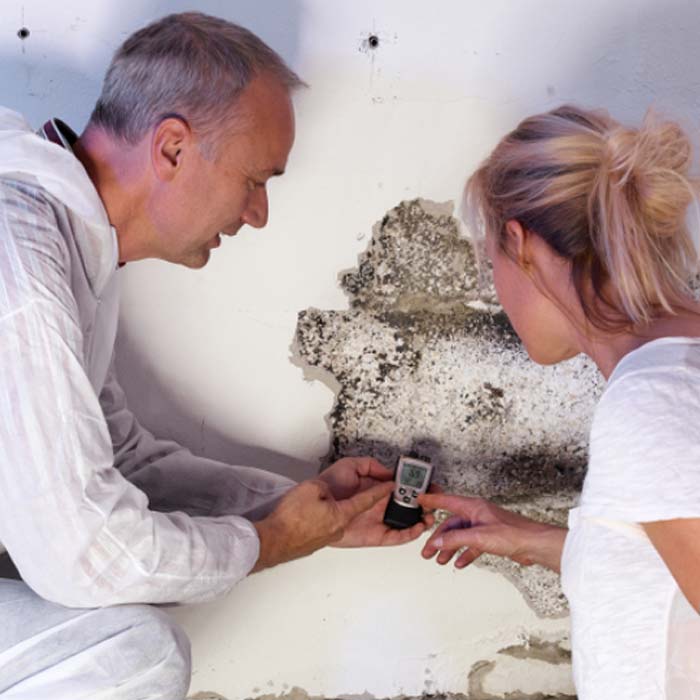
A visual assessment of the areas where moisture collects and mold is most likely to be found — around plumbing, under sinks, behind appliances, at window and door reveals, in bathrooms, attics, crawl spaces and around HVAC.
We also record what we could not examine. Wall cavities, sealed voids and areas behind fixed furniture cannot be inspected without opening them up, and a report that does not say so is not telling you the whole picture.
Moisture investigation
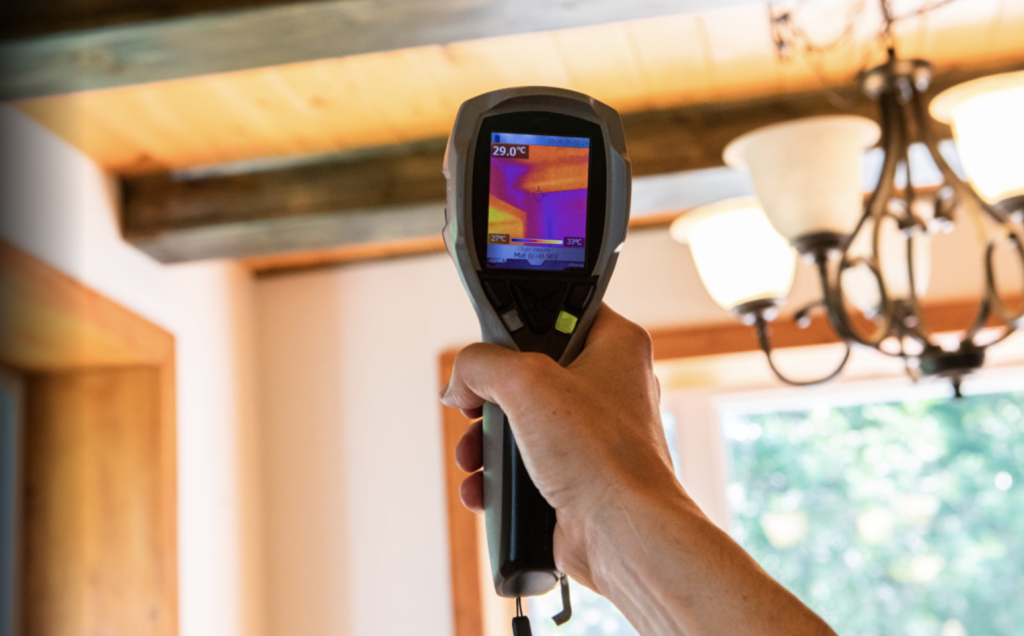
Mold is a moisture problem. Finding growth tells you where it is; finding the water tells you why. We use moisture meters on suspect materials and thermal imaging to find temperature differences that can indicate damp behind a surface.
Thermal imaging does not see mold, and it does not see through walls. It shows temperature difference, which is a clue about where water may be — a starting point for a meter reading, not a conclusion on its own.
Testing is not automatic
Sampling costs money and takes time, so it should earn its place. Sometimes it does, and sometimes it does not — we will tell you which.
When sampling helps
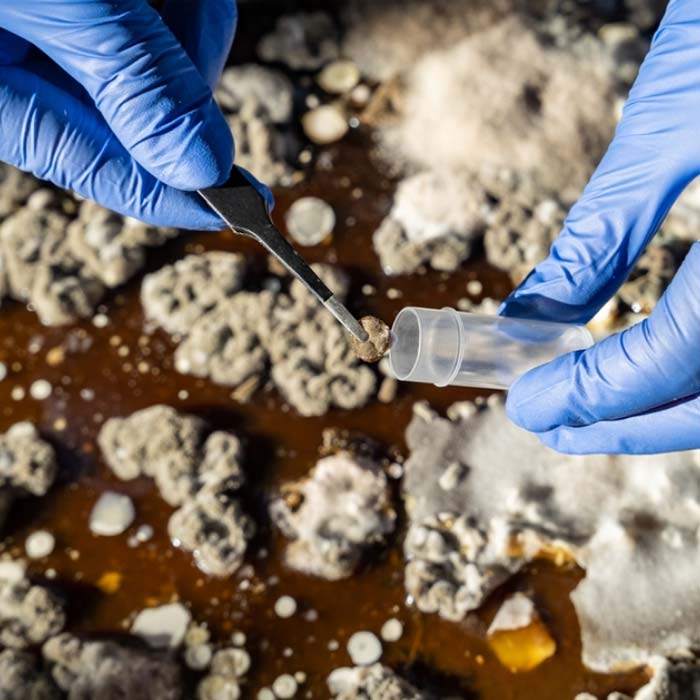
When you cannot see the source, when you need documentation for a transaction or a dispute, when you want a comparison against outdoor air, or when you need to verify an area after remediation.
When it may not
When growth is already visible and the cause is obvious, a sample often confirms what you can see. In that situation the money is usually better spent on fixing the moisture.
Where we do sample, the samples are analyzed by an independent third-party laboratory — not by us. Laboratory results describe what was present in the samples that were taken, at the time they were taken. They are not a complete inventory of everything in a building, and no sampling method can be.
What you receive
A written assessment
What was inspected, what was found, what was not examined, and the moisture readings that support it.
Laboratory results
Where samples were taken, the independent laboratory's analysis, explained in plain language rather than left as a table.
A remediation protocol
Where remediation is warranted, a written scope you can hand to a remediation contractor to quote against.
What happens next
You get the report
Read it, ask us anything that is unclear. There is no obligation attached to it.
Fix the moisture
If a roof, plumbing or drainage problem caused it, that trade needs to correct it or the mold returns.
Remediation, if needed
The protocol goes to a remediation contractor. If we assessed the property, that is a different company.
Verification
Where wanted, an independent assessment after the work confirms the area was properly cleared.
Why we will not do both on your project
In Florida, mold assessment and mold remediation are separate licenses, and the person deciding what work is needed should not be the person paid to carry it out. We hold both licenses, but on any one project we perform one role only. It is a protection for you, not a limitation on you.
Mold inspection questions
How long does an inspection take?
Most residential inspections take a couple of hours on site, depending on the size of the property and how many areas need checking. If samples are taken, laboratory results normally follow within a few working days.
Do I have to have samples taken?
No. Sampling is a decision, not a default. If visible growth already explains the problem, we will say that testing may add little.
Will testing tell me every type of mold in my home?
No, and any company that says otherwise is overstating it. A sample describes what was in that sample at that moment. It is evidence, not a complete inventory of a building.
Can you tell me if the mold is making someone ill?
No. We assess buildings, not people. Health questions belong with a doctor. What we can tell you is what is present in the property and where the moisture is coming from.
Do you remove the mold as well?
We hold the remediation license, but not on a project we have assessed. You would use an independent remediation contractor, working to the written protocol we provide.
How do I check your license?
Search MRSA3298 at MyFloridaLicense.com. It is held by Mauricio Gutierrez and is current.
Tell us what you are seeing
Describe the smell, the stain or the leak, and we will tell you whether an inspection is the right next step — including when it is not.
Online requests are temporarily unavailable
We are rebuilding our online request system. Phone and email are the quickest ways to reach us, and both are answered.
- Phone
- (754) 703-8317
- License
- Mold Assessor MRSA3298