Mold and mildew: common questions
The basics, without the sales pitch.
Mold and mildew, briefly
Both are fungi. In everyday use, mildew describes flat growth on a surface — the grey or white film on bathroom grout, window frames or a damp wardrobe — which usually wipes off and comes back if the conditions do not change.
Mold is used more broadly, including growth that penetrates the material it is on. That is the difference that matters practically: something growing into drywall or timber is not a cleaning job in the way a surface film is.
Neither is a precise scientific category, so do not put much weight on which word someone uses. Whether the material is affected through its thickness matters more than the label.
What we will not tell you
We will not tell you a building is "safe" or "mold free". Mold spores are present in ordinary indoor and outdoor air everywhere; a building with none is not a thing that exists, and a document claiming otherwise would be describing something no method can measure.
We will not interpret your symptoms. That is a doctor's job.
We will not give a firm remediation price over the phone without seeing the property. Anyone who does is guessing, and the number will change once someone opens the wall.
What we can and cannot tell you
This page is general information about buildings, not medical advice. If you are worried about how a damp building may be affecting your health, speak to a doctor — they can assess a person, and we cannot.
Questions we are asked
What is mold testing?
Taking air or surface samples and having an independent laboratory identify what is present and in what concentration. Air samples are compared against an outdoor control taken the same day, because without that comparison an indoor number means very little.
What is a mold inspection?
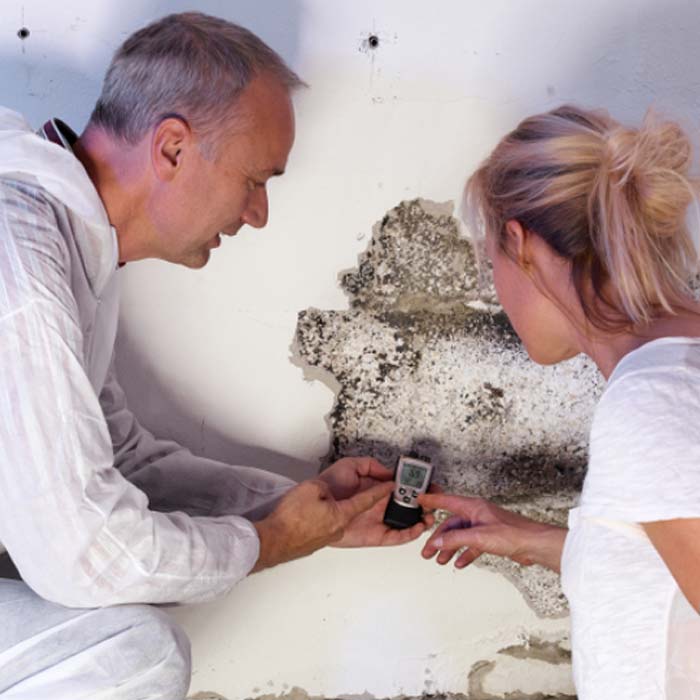
A visual and moisture-based examination of the property: where water is getting in, which materials are affected, and how far it goes. Sampling may or may not form part of it.
Do I need testing, or just an inspection?
If growth is visible and the moisture source is obvious, sampling often adds nothing. It earns its place when the extent is unclear, when a cavity cannot be opened, or when a written record is needed.
Is mildew on bathroom grout something to worry about?
It is usually a ventilation and humidity problem rather than a building-damage one. Improve extraction and it generally stops recurring.
How long does remediation take?
It depends on the area and the materials, and drying is often the longest part. We give an expected timescale before starting and tell you if it changes.
Do you work with insurance?
We can document what we found and what we did, and you may give that to your insurer. We do not advise on, negotiate or adjust claims — that is a matter for you and your insurer or a licensed public adjuster.
What areas do you cover?
Fort Pierce, Port St. Lucie, Vero Beach, West Palm Beach, Fort Lauderdale and the surrounding Florida areas.
How do I get started?
Call (754) 703-8317 or email moldandenvironmental@gmail.com. Online request forms are temporarily unavailable while we rebuild them.
Related
Mold removal vs mold remediation
Two words used interchangeably in marketing. The difference matters for what you should expect to be done, and what you should expect it to cost.
Read moreCommon types of indoor mold
What the species names mean, what they tend to indicate about a building, and why the label matters less than the moisture.
Read moreHave a question this did not answer?
Call or email and we will give you a straight answer, including when the answer is that you do not need us.
Florida licensed
Mold Assessor MRSA3298 and Mold Remediator MRSR3880, both held by Mauricio Gutierrez. Either number can be checked on the state register.
- Phone
- (754) 703-8317